Showing posts with label museum class. Show all posts

Wednesday, April 15, 2009

Soma Cubes

We had a museum class today about shapes. One of the main activities we did was to "play" with Soma Cubes. I didn't recognize the name, but I had seen these cubes before. Basically, there are 27 individual cubes which are connected into 7 puzzle pieces. You then put the blocks together to form different shapes.


Since the class wasn't full, the moms got to get involved and I WAS THRILLED to complete the cube! I've never been able to do this before! (And, I didn't have any hints... we just started with simpler puzzles and I figured it out. I really felt as excited as a kid to figure this out!)

I also completed some other neat puzzles - I think this was called the chair.

The snake.

The bed.


And the crystal palace.
You can either make your own puzzle pieces using small wooden blocks, or you can buy a set. There are lots of sites online where you can find photos of puzzles to put together, like at this site. So, now I'm planning on making a set... or finding a set so we can play at home.

Dragonfly Nymph

Today, we had 2 classes at our museum. One of the classes was about life in a pond -and we were they ONLY ones who showed up! I was glad the teacher was fine with this and went ahead and did the class for us. We really had fun!
She talked about the parts of a pond and what lives in the different areas. But, we had the most fun actually LOOKING in pond water. We used microscopes and saw some incredible creatures.
Alexandra's favorite "critter" was this dragonfly nymph. Isn't he great? And, he was about an inch and a half long! I enjoyed reading about the dragonfly nymph at this Dragonfly Site.
"Once the dragonfly eggs hatch, the life cycle of a dragonfly larva begins as a nymph. A nymph looks like a little alien creature. It hasn’t grown its wings yet and has what looks like a crusty hump hanging onto its back. Dragonfly nymphs live in the water while they grow and develop into dragonflies. This portion of the dragonfly life cycle can take up to four years to complete, and if the nymph cycle is completed in the beginning of the wintertime, it will remain in the water until spring when it is warm enough to come out."

Tuesday, October 14, 2008

Mummies... They're Not Just From Egypt


We went to a neat museum class today. It was all about mummies... and not just those from Egypt! Did you know "mummy" came from the Latin word "mumia"? Mumia is borrowed from a Persian word, mumiyyah, which means bitumen. The skin of the Egyptian mummies was blackened, and it was once thought to have been blackened with bitumen. Thus, the word "mummy" because they thought mummies were blackened with bitumen.
Wikipedia says "A mummy is a corpse whose skin and flesh have been preserved by either intentional or incidental exposure to chemicals, extreme cold, very low humidity, or lack of air when bodies are submerged in bogs. Mummies of humans and other animals have been found throughout the world, both as a result of natural preservation through unusual conditions, and as cultural artifacts to preserve the dead." Today in our class, we talked a lot about both intentional and accidental mummies.
INTENTIONAL:
  • Ramses the Great & other Egyptian mummies
  • The Ice Maiden of Peru - the Incas evidentally practiced mummification and, unfortunately, ritual sacrifices - this "ice maiden" also named Juanita, is the best preserved Incan mummy found to date
  • Famous people like Vladimir Lenin, founder of the Soviet Communist Party - his body must be maintained weekly. Also, Mao Tse Tong & Eva Peron have been mummified.

ACCIDENTAL:

  • Otzi - the Ice Mummy (there's a children's book called Ice Mummy, but we haven't read it) - accidentally frozen
  • Tollund Man - one of many 'bog bodies' - corpses found in a peat bog which seals out oxygen and therefore mummifies

After discussing mummies, the kids got to make an Egyptian mummy. They were to treat their corpse respectfully as the washed it, put it in natron, removed the organs, etc.

I have missed going to these classes as we always learn so much. We are signed up for a coin class in November and one about the Underground Railroad in December.

Monday, February 19, 2007

mosaic

Yesterday (Yes, Sunday), Alexandra decided to do her "homework" for her Rome class at the museum. The teacher had given them an outline of a gecko and they were supposed to make it into a mosaic. We'd went shopping on Saturday and bought some mosaic pieces of different shades of green. She used this to put together her mosaic.


There weren't enough pieces to share, so I just laid mine out and took a photo & then dumped them for her to use. :-) (Photo of mine below. It was a lot of fun!)


Alexandra gets a "prize" later this week when we "hand in" her assignment. (She asked the teacher, and "Yes", she can get her project back if she wants it. Otherwise, it'll go on display in the room.

Friday, November 17, 2006

Egypt with a Docent

(above: picture of Alexandra holding a replica of a mirror found with King Tut - since they didn't have glass, they used brass for their mirrors instead)
Today we went to our local museum for a homeschoolers-only docent tour of an Egypt exhibit. I thought she would just tell us things we already knew, but I was very mistaken! And, besides learning new things, we got to see and touch things, too.
Here are some highlights:
  • before the tour started, we looked around the gathering room and the docent discussed with us the difference between the pyramids of Egyptian, Mesopotamian (ziggurats), and the Mayan civilizations
  • Alexandra got to lie down on an Egyptian wooden "pillow" - it's like a neck rest, but it is quite a ways off the ground - it looks very uncomfortable
  • I learned that hieroglyphic is an adjective (like "hieroglyphic writings) and hieroglyphs is a noun - I didn't know the difference!
  • we got to smell myrrh! (very nice smell, it's used in expensive perfumes, too)
  • we learned that the length of the linen used in wrappings was about 6 football fields!
  • we got to see a model of the Rosetta Stone and learn how a man deciphered it
  • we learned how you know which way to read hieroglyphs (you look at the pictures of animals and read from nose to tail)
  • we learned that after removing the brain, they stuffed the nose with peppercorn - they believed that when the body woke up, it would sneeze and then start breathing!!!
  • we learned that in the US, Victorian women would have mummy parties - they bought a mummy and the guests unwrapped it and got to keep all of the amulets they found
  • Alexandra got to pick out 2 amulets - she picked a frog, which is wrapped around the foot, and a bull (I think), which is wrapped around the back - I believe she said there are 251 amulets wrapped in a body!!!
  • we got to look at and touch natron
  • we got to see models of the various types of Egyptian pyramids - from the earliest single-layer, to the more complicated Great Pyramid
  • we learned how they made the bases of the pyramids level - they dug a grid into the bedrock (see photo above) and then the flooded it and they knew how to level it by the water!
  • we also learned how the used a level - Alexandra is demonstrating it in the photo above - when the string with a weight on it lined up with a mark on the level, they knew they were leveled
I'm sure I'm forgetting some wonderful things, but it was just a great, informative class! And, it was small, too - only 3 girls and their moms! Alexandra got to ask all the questions she wanted... and so did I.

Wednesday, November 15, 2006

Ben Franklin Class


Yesterday, we took a class about Benjamin Franklin at our history museum. We did 3 main activities:
  1. made a "quill pen" which Alexandra loves (just a feather taped with masking tape to a pencil)
  2. did several experiments with static electricity - this was LOTS of fun! (see photo)
  3. made some "prints" like Benjamin Franklin the printer - I was busy and missed seeing Alexandra do hers!

Balancing Class


Yesterday, we went to two classes at our history museum. The first one was a great class (they're all great!) about balancing.

The children first experimented with balancing a ruler on their 2 index fingers. Then, they worked on balancing different shapes on the eraser of a pencil. This was a lot harder for the kids than I would have thought!

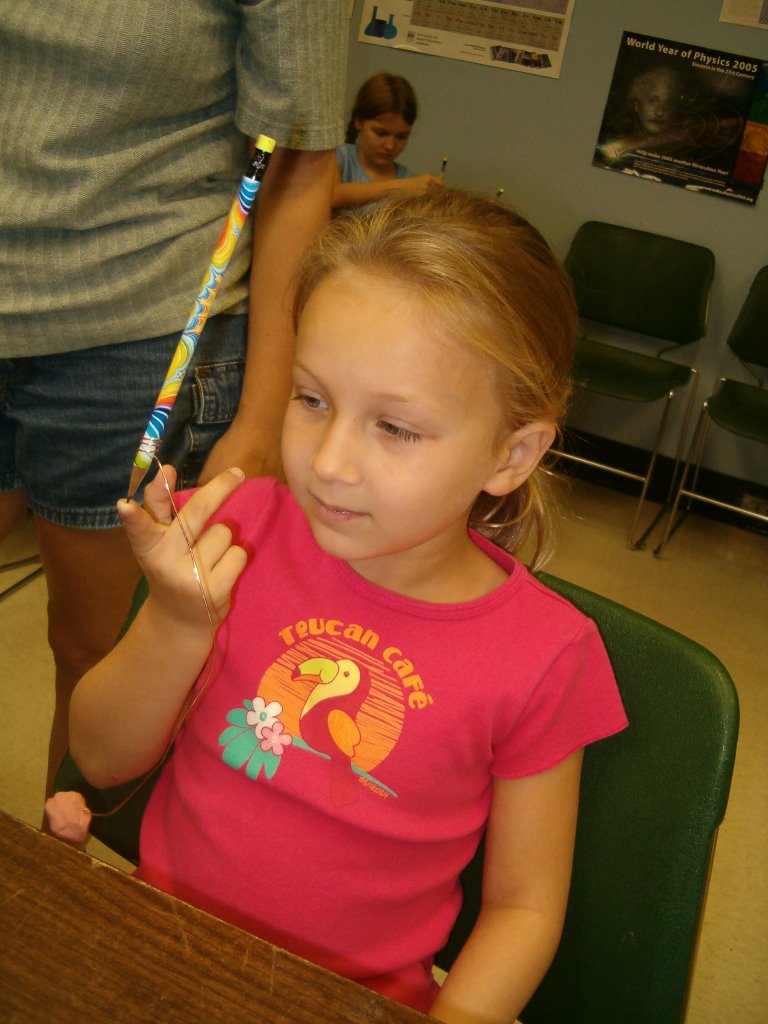
Later, they learned how to balance a pencil on its pointed tip! This was a lot of fun and the children got to take home their balancing pencil. Alexandra is carrying hers around and playing with it a lot. It's hard to see in the photo, but to make it you wrap a wire around the pencil and then put a "glob" of clay at the other end of the wire. Then, you bend the wire in an arch so that the clay is lower than the tip of the pencil.

Wednesday, October 11, 2006

7 Wonders of the Ancient World & 3 Types of Rocks


Yesterday, we went to our monthly classes at our natural science museum. One of the classes dealt with the Seven Wonders of the Ancient World. Besides discussing them and looking at pictures of them in a book, we did 3 things:
  1. Cut out pictures of each wonder and glued it on a map
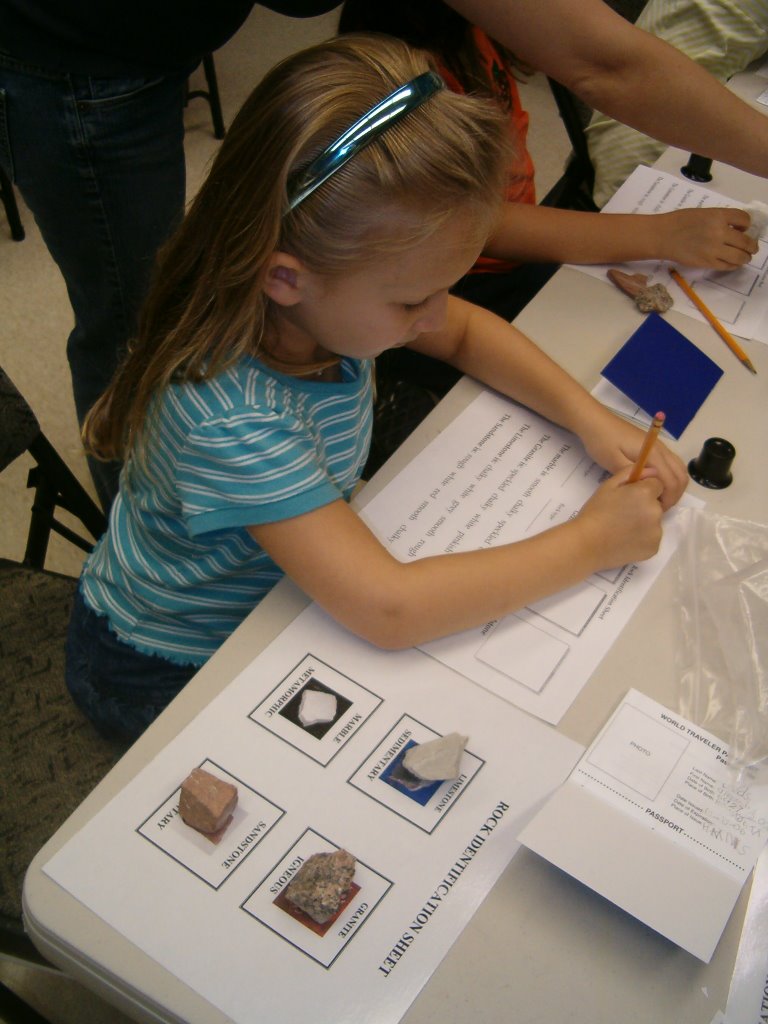
  2. Talked about the 3 types of rocks and their properties (as the wonders were made out of rocks)
  3. Showed how an armature (like a frame) helps statutes be stronger by showing how a wire helps a notecard hold more weight
I thought they were good projects and especially like the mapwork. Also, the teacher had asked us to read about the 7 wonders, the 3 types of rock, and to look at the countries surrounding the Mediterranean Sea before class, so it was a great way to reinforce what we'd studied.
Some books we enjoyed:
  • Let's Go Rock Collecting by Roma Ganse
  • The Seven Wonders of the Ancient World by Bentley - we looked at pictures & discussed them
  • Seven Wonders of the Ancient World by Curlee - read the whole thing in one sitting! It's a pretty big book with stories about each of the wonders - our teacher did tell us that their interpetation of Colossus at Rhodes was probably incorrect - he actually stood kind of like the Statue of Liberty with a torch

Tuesday, September 12, 2006

What do Archaelogists do?


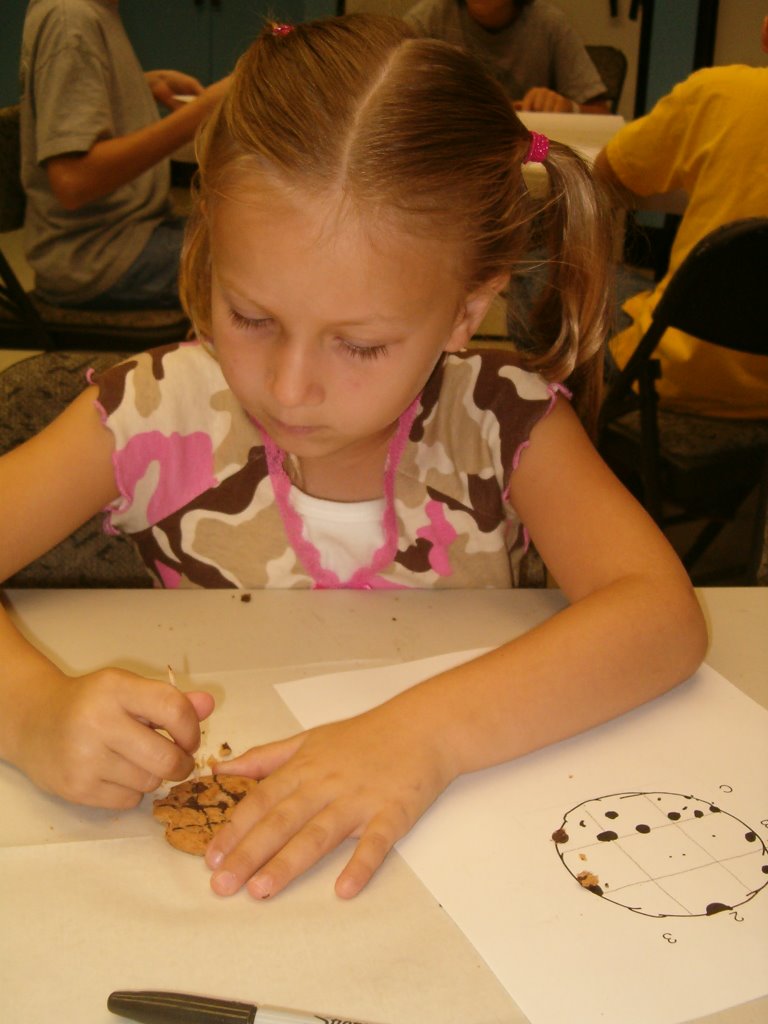
Today, Alexandra & I went to an Archaelogy class and then a Dinosaur class at our museum. For the archaelogy class, we got to play like we were archaelogists by doing a survey & excavation... of a chocolate chip cookie. The chips were our artifacts. First, we had to make a grid & record the artifacts we saw, then we dug the artifacts out without breaking them (hard to do!), and then we placed them on our grip.

Next, we got to do some analysis by using pottery shards to figure out the diameter of their openings. The teacher gave us a scale sheet for us to use. This was a wonderful example of what archaelogists do.

And, lastly we used a plastic skull and a guide to try to determine if our skull was a male or female. We got it right! (This is our Mr. Skull)

Monday, August 28, 2006

Photographic Odyssey

We recently went to the Amon Carter Museum in Ft. Worth. It is an art museum that primarily focuses on photography. We went for a homeschool class for my dd, but the parents also took a separate class. It was one of the best classes I've ever been to! Amazing!

The teacher was so enthusiastic and you could tell how passionate she was about the subject, the history of photography. We discussed photography for 2 hours and I could have sat for many more hours.
First of all, the history is just amazing. And, the teacher was showing us what was going on in other areas of the art-world at the same time. We also would just study a photo or picture and discuss the people, the scenery, etc. It's hard to explain how it was opening my eyes to studying art! There are pictures forever etched in my mind now!

After the "lecture", I thought, "I wish I had found a career I was passionate about." And then I realized something: while I wasn't that passionate about my career I learned while in college, I am passionate about homeschooling and am now doing something I love!

Alexandra enjoyed her class, too, and we both made new friends - which just happened to be a mother & her daughter! So, afterwards, we went out to eat at McDonald's and then back to the museum to let the girls show us around.

The girls learned, among other things, about truth in art. They learned that even pictures can lie. They studied a photo of a native American girl in front of a Navajo blanket. She wasn't a Navajo!

The children each brought something that was really "them." Alexandra brought her American Girl doll, Jess. The children had their friend take a picture of them, and then they took a picture of their object. They then had these 2 Polaroids matted which we can frame later. It was a great project and a great learning experience. We will definitely go back for their next homeschool class this spring!

Sunday, July 02, 2006

Corridor of Antiquities


On Friday, we met some friends at the art museum for a homeschool class and Creation Station. The teacher took us to the "corridor of antiquities" which features Roman, Greek, and Egyptian artifacts. She also explained what "corridor of antiquities" meant.

The children each were to pick an artifact and write a story about it. They were to make up a story about where it came from, who found it, how it got to the museum, why it was so valuable, etc. Alexandra picked an Egyptian falcon-headed canopic jar. She told a story about Elizabeth finding it and giving it to the museum. She was too shy to read it aloud to the group, but she let me read it. By the way, I thought this was a great exercise and I plan on doing it again! It'd even be fun at a zoo to tell a story about one of the animals. And then draw a picture, or course.

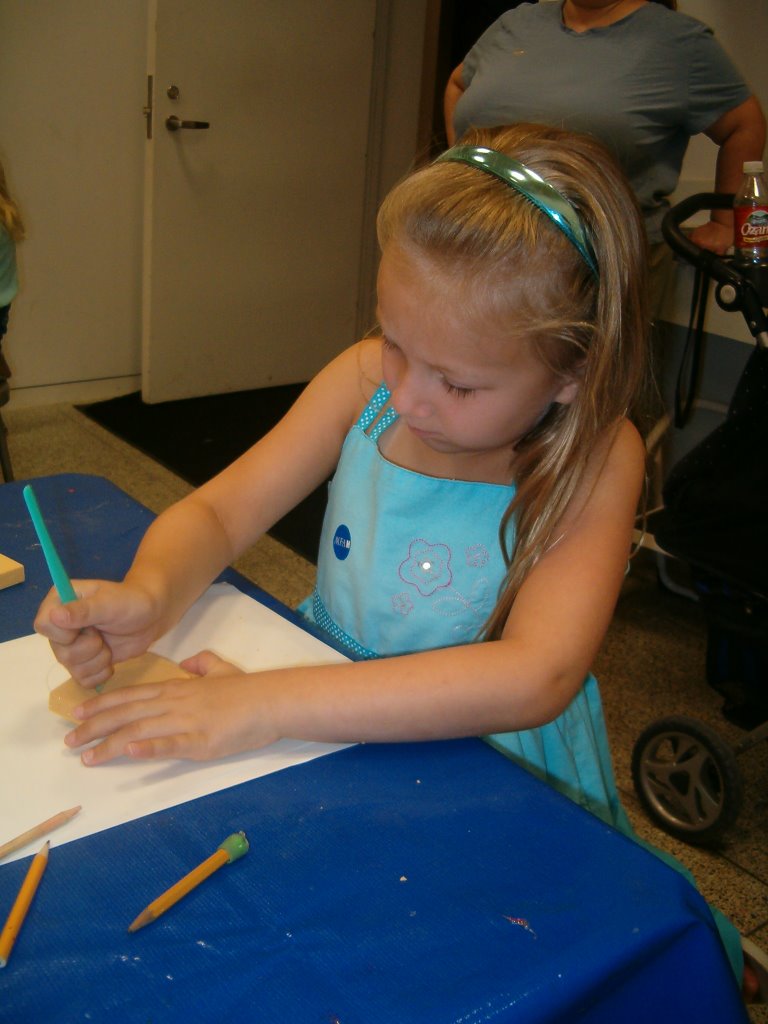
In Creation Station the children made Roman coins out of balsa foam, something I'd never seen before. It's a neat material as it carves so easily - you can carve it with a pencil. But, it does create a lot of "dust!" And, one of our younger friends got some in her eyes.

Friday, June 09, 2006

Art Around the World - Greece


At our local art museum, they are having 3 classes per week for kids this summer that focus on art around the world. On Thursday, we went to our first class. We missed story time because of swim team, and I'm not sure if the stories are related or not.

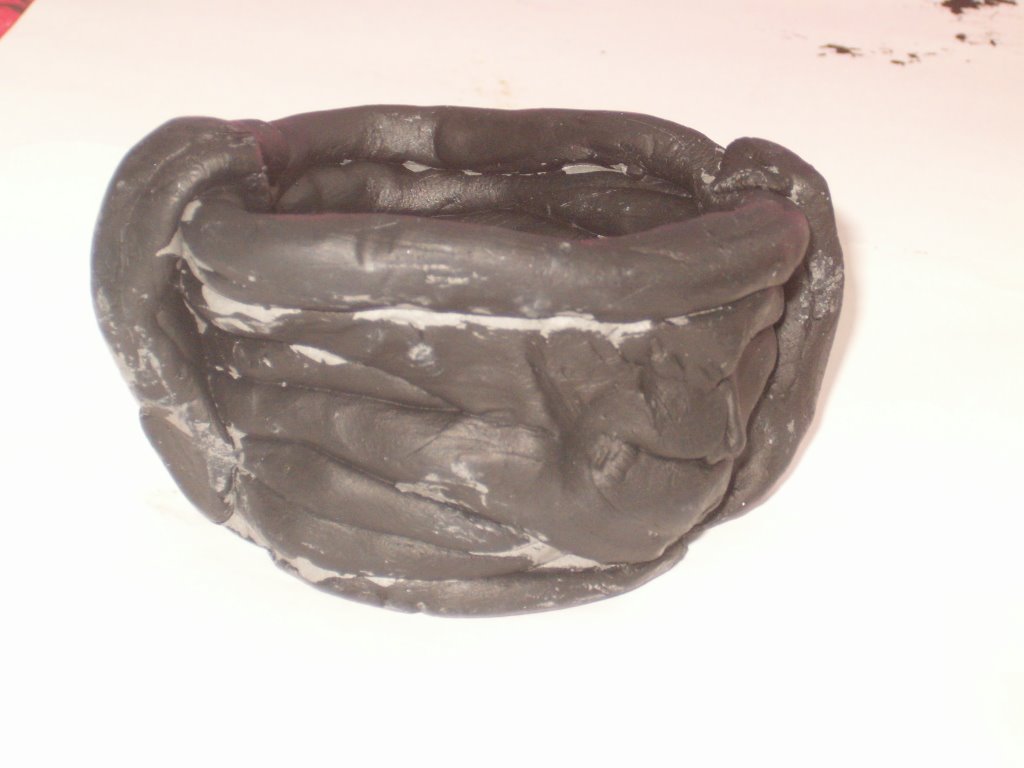
We did go to Creation Station where you create your own art. They were making "Grecian pottery" out of clay. They taught the children how to make pinch pots and coil pots. Alexandra made a coil pot and then painted it black. It also has 2 handles which are kind of hard to see in the photo.
She also got a passport and a passport photo to record her art "travels" this summer. And, she got a "stamp" (sticker) for Greece.

The 3rd part of each day's travels is sketching in the gallery. We both got camp stools, clip boards, pencils and erasers (you could also get colored pencils) and headed to the Greek portion of the library. We both sketched a horse with a rider, but I accidentally got black paint (from the pottery) on Alexandra's sketch. We both had so much fun! I'm glad she enjoys art so much, and that we have such a child-friendly art museum.

Tuesday, May 16, 2006

Mammals


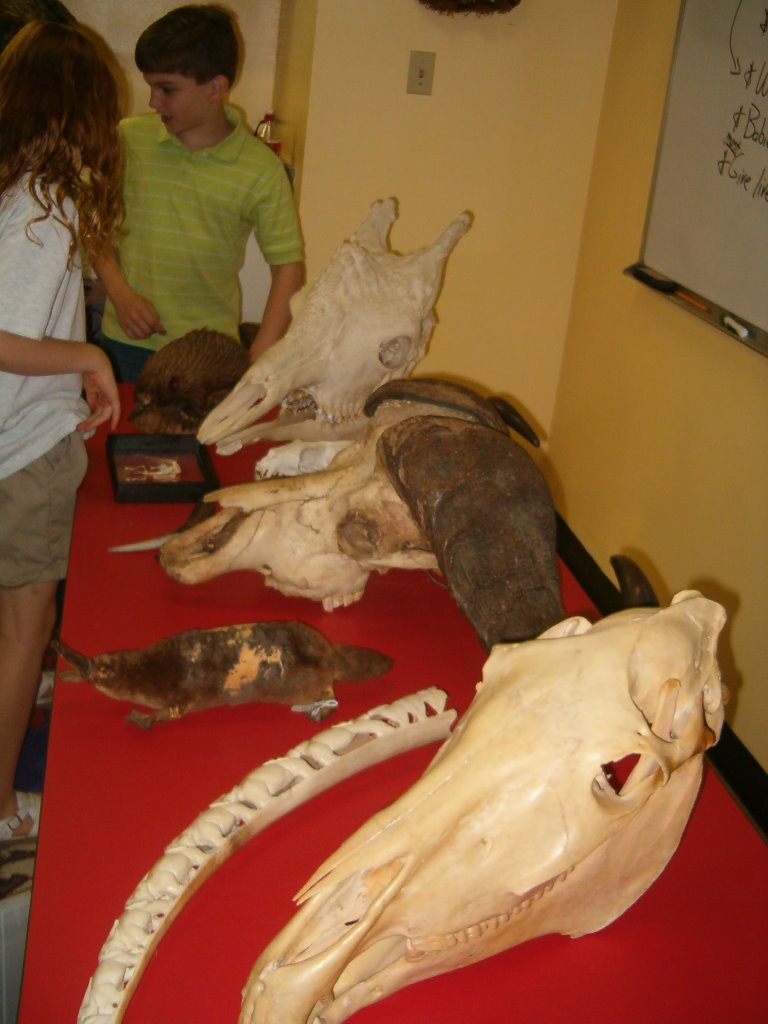
I'm not sure how much we'll do with this, but I have a few more books on order. Last month, Alexandra went to her monthly science class and it was about mammals. The teacher, as always, was wonderful. He talked about the 3 divisions of mammals: marsupials, monotremes, & placental. Anyway, when I got home we checked out a few books & they've been great.

The picture above is from some of the skulls that were on display at the class. There were also some live animals, but those pictures didn't turn out. They also went into the museum & each child sketched one of the mammals & thought about how it was especially adapted for it's environment. Alexandra chose a Dik-dik and discovered that its very small size helped it hide from predators.

Resources:

  • Is a Camel a Mammal? by Tish Rabe (Dr. Seuss Learning Library) - great book/great series!
  • It Could Still be a Mammal by Allan Fowler - short, but nice
  • About Mammals: A Guide for Children by Sill - short & simple - good for younger kids

Friday, March 31, 2006

Cool Chemistry


Yesterday, we went to a class at HMNS called Cool Chemistry. The kids learned about elements and did several experiments. The experiments were mainly about reactions of acids & bases (using Alka-Seltzer) and how temperature and surface area affect the speed of the reactions. I was wonderfully pleased with how understandable the teacher made the concepts for a 5-year-old!
Related Posts with Thumbnails